Streaming retention should count who comes back
A customer who cancels after a finale may return at full price for the next season. Retention budgets should account for that choice.
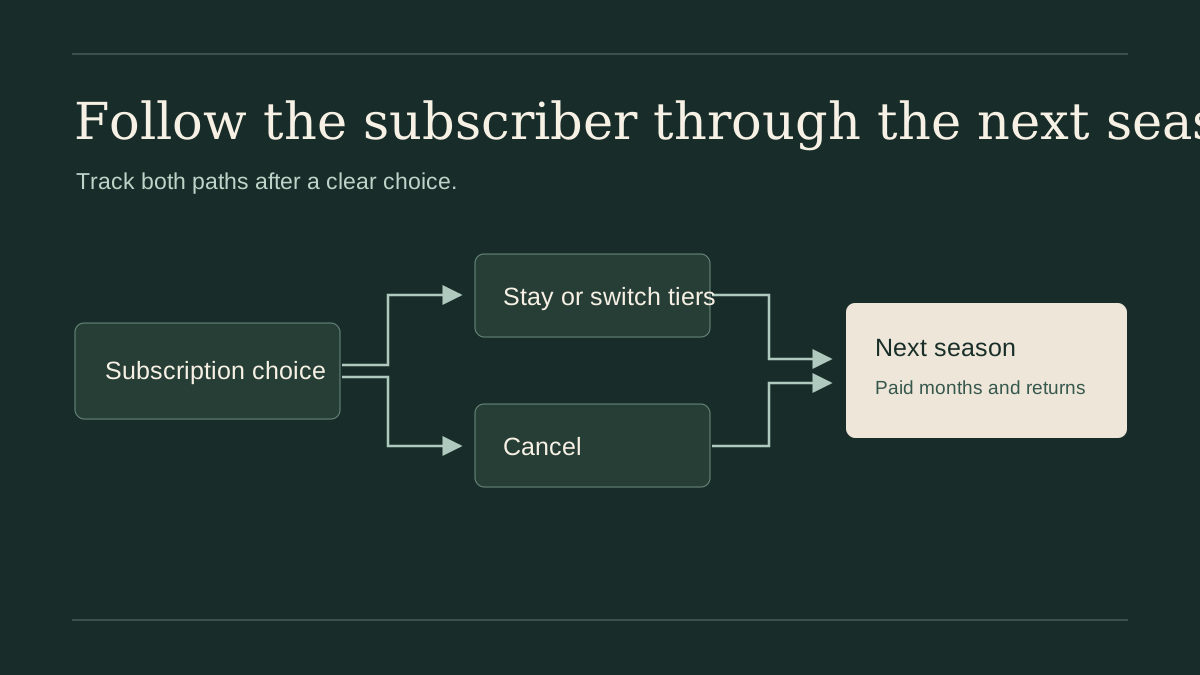
What a cancellation can tell you
A subscriber who leaves after a season finale can be a better customer than one who keeps paying for a service they barely use and did not realize would renew. The first household has demonstrated a willingness to pay for something specific and may return when there is something else worth watching. The second can look better on a retention dashboard until it discovers the charge. Streaming executives should judge subscription design by the paid demand it keeps and can win back after a clear choice to leave. A dashboard that ends at cancellation will give too much credit to some changes and reject useful ones.
Disney’s November 17 earnings release shows why the choice of metric matters. The company reported fiscal fourth-quarter subscription video-on-demand revenue of $6.1 billion, against $5.1 billion a year earlier, an increase of 19%. It attributed subscription revenue growth to both rates and volume and said the extra fiscal week contributed to the comparison. Those figures describe reported revenue for that business. They cannot tell an investor how many households renewed because they understood and valued an offer or how many might come back after taking a break. A good quarter makes it easier to ask for that evidence before choosing the next pricing or retention change. [1]
There is already evidence that cancellation and demand can coexist. In its 2024 review, Antenna estimated that a quarter of cancelers resubscribed to the same service within three months. Its later analysis of premium streaming showed negative net additions across the third quarter of 2026, with September returning to positive net additions on the back of both higher gross additions and fewer cancellations than August. The observations are useful for timing a test. They leave open how much of the movement reflects programming, promotions or other changes. Antenna uses a weighted panel of permission-based transaction signals. Its coverage and definitions can differ from what streaming companies report, and the panel observes transactions more directly than motives. [2] [3] [4]
Price the offer before counting the save
The most persuasive objection comes from the team that runs retention. Some viewers choose to cancel because the paid tier is too expensive, and a cheaper plan with ads or a temporary pause may be precisely what they want. Showing an alternative can spare them the trouble of leaving and rejoining. A blanket ban on offers would discard that benefit. The useful question is how much a household understands about the option it has chosen, including what happens to its charge, what it can watch and when a promotion ends. Put the alternative beside a visible way to finish cancelling, then measure whether people who knowingly accept it keep watching and paying.
There is a concrete example of the difference between an offer and an obstacle. The stipulated federal order that resolved the FTC’s Amazon Prime case required simple mechanisms to cancel covered recurring arrangements. The FTC said the underlying case involved allegations about enrollment and cancellation. In September 2026 the agency announced expanded redress under a revised order. Prime combines benefits beyond video, and the order governs the parties and arrangements it covers. Its relevance to a streaming manager is the commercial cost of treating recorded renewals as evidence of demand when the path to stop the charge is itself disputed. [5] [6]
A retention team may have a second objection. Easier cancellation could reduce paid months, while enticing a customer back with a discount costs money. That loss matters. The answer should come from a comparison between clear offers that customers can decline. A discount is worth less if subscribers would have come back at full price for the next season. An ad-supported downgrade can be worthwhile if its subscription and ad contribution cover the costs it brings, including any contractual or service costs that change when viewers move tiers. A lower cancellation count alone cannot settle either question.
Make return behavior part of the budget decision
Consider a hypothetical service preparing to renew a drama that attracts subscribers in short bursts. It can compare the paid months and contribution brought in by households that joined for the last season with the cost of serving and reacquiring them. It should identify distinct billing routes where possible, because app stores, direct subscriptions and bundles can change both the steps a customer must take and what the streamer can observe. For a bundle, a household’s continued payment may reflect another service in the package. The team should record what it knows about usage and entitlements and leave the reason for renewal open where the evidence is weak.
A fair test would compare clearly disclosed alternatives against a straightforward exit, keeping the title calendar and major promotions comparable. At the moment of choice, ask a sample of viewers what they expect to pay next and whether they expect access to continue. Then compare completed exits, mistaken-charge complaints, repeat viewing, net paid months and the contribution from returns after discounts. A study should account for households that change billing channel and should define how it handles those it cannot match. If viewers who understand a downgrade keep using it and contribute more over the period than similar viewers offered the clear exit alone, that is evidence for keeping the offer. If the immediate saves fade as complaints and later cancellations rise, the same evidence argues against funding it.
The observation period should reach past the promotion and include the next comparable programming window. Otherwise the test rewards an offer that merely pulls a return forward or moves a household to another billing channel. Keep households in their assigned comparison group when calculating results, including the ones that leave without taking an offer. Where a platform cannot follow the same household after a channel switch, report the missing coverage. Treating every unmatched return as a new customer makes the season look more successful than the records can establish.
For a finance leader, this changes what gets money in the next budget. Give a return offer credit for the margin it actually adds after promotion costs. Give content credit for bringing households back if their behavior can be distinguished from reacquisition through a cheaper bundle or a coincident promotion. A household gets a simpler way to manage its spending, and the programming team gets a more useful signal about which titles earn a return visit. A retention campaign that needs an opaque exit to hit its target gives a board a poor basis for committing to the next season. If subscribers cannot explain what they chose, the business should fix the choice before it scales the campaign.
Sources & public records
- The Walt Disney Company via SEC · Fiscal fourth quarter and full year 2026 earnings release · 2026-11-17
- Antenna · Premium SVOD 2024 Year in Review
- Antenna · Premium SVOD: Q3’26 Net Additions Down Slightly
- Antenna · Methodology and subscriber coverage
- US District Court via FTC · Stipulated final order in FTC v. Amazon.com
- Federal Trade Commission · Additional payments under the Amazon Prime settlement
Related analysis