The team behind the IP belongs in the financing case
A loan can be secured against a franchise while repayment still depends on people. Studio boards need to evaluate those dependencies together.
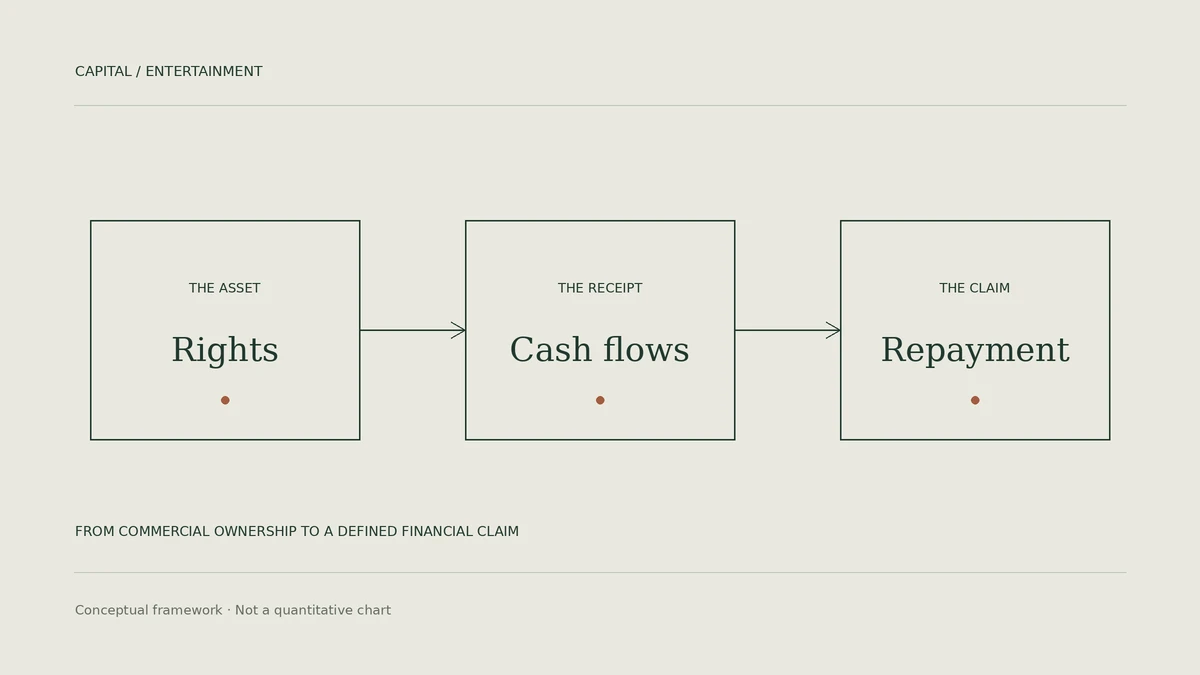
A financing model is also an operating plan
Imagine a studio whose financing model assumes its game will keep earning, while its operating plan removes the people who keep it worth playing. Each plan might look defensible in isolation. Put them in the same board pack and the contradiction becomes harder to ignore.
The operating question inside IP-backed lending is simple: what work must continue for an asset to produce the receipts promised to its financiers? A board should make that dependency explicit before debating how much a franchise is worth. The financing case is incomplete until someone has explained how the business supporting the collateral remains operational.
Take-Two’s annual filing for the year ended March 31, 2026 shows why continuing engagement deserves attention. Recurrent consumer spending accounted for 78.1% of its revenue. The company includes virtual currency, additional content, in-game purchases and advertising in that category. It also identifies dependence on creative and technical personnel as a business risk. Those disclosures do not establish a particular staffing requirement; they do establish that the revenue model and the people operating it cannot be examined as unrelated subjects. [1]
The management implication is more demanding than a general appeal to protect talent. Identify the activities that sustain the receipts being financed. Distinguish the work needed to maintain an existing experience from the investment intended to create a new one. Then explain which assumptions in the financing model depend on each. That gives a board a basis for challenging both an optimistic revenue forecast and an indiscriminate cost reduction.
It also brings the player into a conversation usually conducted between owners and providers of capital. A claim on revenue does not explain why someone keeps paying. Where the business case assumes continued participation, the operating case should account for the service, content and relationships on which that assumption rests. The player’s experience belongs in the asset discussion.
The distinction a board needs to make
Not every entertainment asset has the same dependency on continuing creative work. Lionsgate Studios’ March 2026 annual filing describes a tax-credit facility secured by specified receivables. It separately describes a historical film-library facility backed by rights whose value was assessed through projected library cash flows; that facility was repaid and terminated in September 2025. The two arrangements illustrate different sources of repayment, rather than a universal template for financing entertainment. [2]
An identified receivable puts much of the inquiry around the claim, the payer and collection. Income that depends on exploiting rights introduces a different set of questions about what must happen before the money arrives. A loan secured against either asset may be perfectly sensible. The mistake would be to assume that their operating requirements are interchangeable because both sit in the same industry.
WIPO’s valuation guidance makes a related distinction: an asset used in financing needs to retain its validity and marketability. A studio board should extend that inquiry into the operation supporting the asset. If the value depends on continued delivery, an account of legal ownership alone leaves part of the financing argument unfinished. [3]
There is an obvious danger in taking this reasoning too far. “The team creates the value” can become an excuse to defend every existing cost. A company can have valuable intellectual property and an inefficient operating model. Specialist finance should not require management to freeze the organization or preserve roles regardless of their contribution.
The useful distinction is between protecting a capability and protecting an unchanged organization chart. A capability might be delivered by a smaller team, a different production process or an external provider. But replacing it is an operating proposal that needs scrutiny. A cheaper line in the budget is not, by itself, evidence that the same service can be sustained.
That qualification matters for workers as well as lenders. The argument is not that financing automatically preserves employment, or that every reduction damages an asset. It is that production and staffing assumptions should be visible when the financing is approved. Otherwise, a decision presented as a narrow capital-structure choice can quietly contain a much larger decision about how the studio works.
Put the dependency in the deal
For leadership, the practical response begins before comparing offers. The finance team and the people responsible for operating the title should reconcile their assumptions. Which receipts are being relied on? What work supports them? What happens to that work under the proposed payment priorities and restrictions? The board needs a coherent answer, rather than separate presentations that use the same revenue figure for different purposes.
That exercise should also distinguish an attractive price from an attractive financing structure. A lower quoted cost of capital is of limited use if the associated terms leave the business unable to carry out the operating plan on which repayment depends. Conversely, tighter restrictions can be a reasonable bargain where they support a well-defined asset and a realistic plan. The decision turns on the whole arrangement.
The lender has an interest in the same discipline. Asking for a credible operating plan is more informative than relying on an expansive valuation followed by a generic promise of cost control. Where receipts are demonstrably dependable without much ongoing intervention, a broader claim on cash may be easier to justify. Where delivery and continued engagement do substantial work, those dependencies deserve explicit treatment.
For a creative team, clarity about the operating commitment does not eliminate commercial risk. It does make the decision legible: what is being financed, what must be maintained and which party has discretion when conditions change. That is a more concrete basis for accountability than treating people as strategically important in one presentation and unexplained overhead in another.
No financing document can manufacture player loyalty or compel creative judgment. Those limits should discipline how an entertainment asset is financed. The board’s task is to test the connection between the legal claim and the functioning business, then decide whether the bargain leaves enough room to sustain it.
The question to carry into the financing meeting is therefore an operating one: after the capital has arrived and the claims on cash have been agreed, what is the studio still equipped to do? A convincing answer belongs in the investment case from the beginning.
Sources & public records
Updates & corrections
2026-11-04 · Substantially revised to examine the operating capabilities behind IP-backed financing, with a Take-Two filing reference added. Original publication date and URL retained.